Why Martin County Needs A Rural Resort Land Use

Once again, Martin County finds itself without the right development code in place to move projects to completion.


I have written about the Discovery Land project on Bridge Road before. It will bring extremely expensive homes to the county in a resort setting. For all intents and purposes, there will be millions in tax revenue and require little in county services. Those who believe that placing enough roadblocks up will deter development are dreaming.
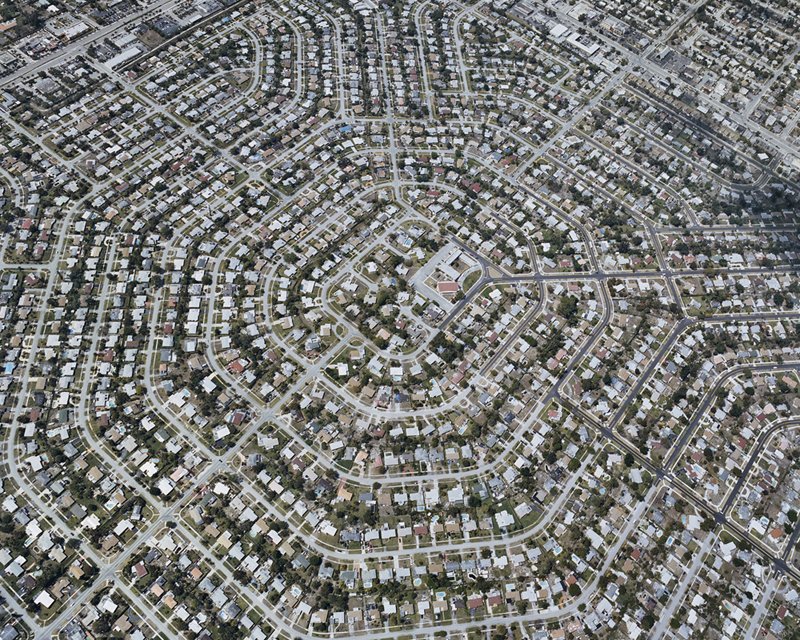
Suburban Sprawl

Discovery will bring many fewer units than what would be built in a more traditional development project. The choice is several hundred units worth millions each or several thousand worth $300,000 each. The latter would require many county services, and the former would not.


Most of the land in the Discovery project will remain undeveloped. In addition to the construction jobs which are always temporary, there will be a slew of others to support the resort plus ancillary businesses like shops and restaurants. To me it has always been an easy choice…the feared Browardization of thousands of rooftops or a few rich ones.


That doesn’t mean that development of Discovery will not come without rules. Right now, it does not seem current code quite fits the “rural resort” nature of the project. I understand staff and the applicant are attempting to write the code but is that the best way to go forward?


This project and others that may come after may be more than the staff can handle. And to rely on the applicant to help define the code changes necessary may not be the best for the county. The county needs to hire a consultant to expeditiously write what is necessary to move forward. Commissioner Smith is very fond of the Treasure Coast Regional Planning Council. As time goes by, I have become a convert.


The county should get a quote from the council and others if it wants to write the best code for “rural resorts” for the benefit of all the parties. That would also take an immense pressure off the Growth Management department. At the same time as a neutral third party, the council would be able to more fairly hear the concerns of all sides.


There are several other projects that are in the wings that would fit the rural resort criteria, e.g., very high-end golf courses. These are not golf course communities but rather places where the rich fly in to play golf for a couple of days like Michael Jordan’s existing club. This type of development would be preferred to having endless rooftops in western Martin.


In my mind, this is smart development. People have a right to develop the property they own. Let’s make it easy for them to do so by creating a rural resort classification. At some point, the Harmony development, and others like it will end up being built if alternatives are not provided. In my opinion, that is what most Martin County residents want to see.


The government does not own the property…private property owners do. A well-written land classification may help keep endless seas of rooftops from the area. I think that is the smart way of having the inevitable growth.
We Need To Think Realistically About Martin County’s Future

There is no doubt that I am in support of good infill projects in Stuart and Martin County’s CRAs. That does not mean I endorse those projects that are poorly planned or disregard the codes and comp plan.


Martin County is on the cusp of deciding whether it will embrace sprawl or embark on a different course. The county can either continue the westward creep of more suburban mid-level 1960s-type single family home development or capitalize on our natural beauty. The Discovery/Becker Farms joint venture off Bridge Road is a unique opportunity to do just that.

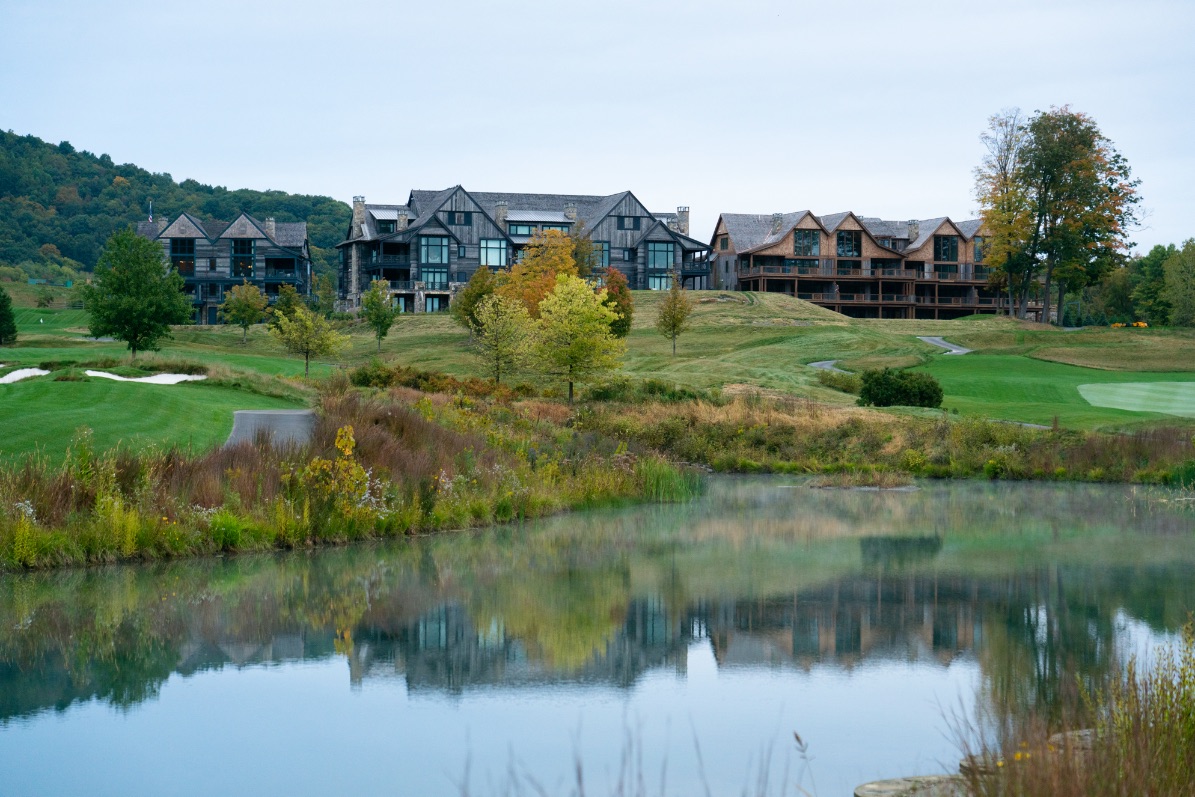
Silo Ridge in New York’s Hudson Valley has been popular with celebrities like Tom Brady

The project is a very wealthy man’s dream. It will be a place where the home buyer will spend millions to build a 3rd or 4th home for his collection. There will be no additional need for law enforcement or schools. The most that county services will have to do will be an occasional ambulance call. The real estate tax impact is estimated at $25 million with very few homes having a homestead exemption. Within the next decade, the alternative would be thousands of homes being built there instead of a few hundred.


The BOCC will also have the opportunity to approve the many high-end private golf courses coming our way. They will have no homes built, but there will probably be a few guest cottages and a club house at each. People will come from all over the world to become members and play on these courses. The impact to our environment will be minimal.


The private courses will also add millions to our tax rolls. Not to mention Discovery owners and golfers eating in our restaurants, buying goods from our merchants, and employing hundreds of residents. Or we can build thousands of homes and become what we have tried to avoid.


Many very naïve people believe that the BOCC or Stuart Commission can just say no. They cannot. There are such things as property rights. The current lawsuit that Harmony has against the county is all about property rights. That is in addition to the millions spent in previous lawsuits and settlements because of the disregard of individual rights.


What government can do is help shape what will be built. Development codes need to reflect that vision.


For those that want to see more housing, then it should be done in the city and CRAs. In these areas, there are quite a few underutilized properties. Just look at the Federal Highway corridor. Single story centers with empty stores and acres of empty parking lots. Adaptive re-use would give us mixed use developments with buildings set closer to the streets and parking in the rear or in some cases in parking garages.


It is time we stop the silly illusions some have that those empty parcels within the city and county Urban Service Boundary are going to remain vacant. People are going to come here to live and work from other parts of Florida and the country. We all need to recognize this and stop the propaganda that persists regarding some governmental power to prevent development.

Photo From Conservation Fund

What we can do is shape it so that large swaths of Martin continue to be used in agriculture and ranching. At the same time, the county can get behind projects like the Loxa-Lucie, IRL South, and Pal Mar to save wetlands and provide a natural flow way.  We can adopt realistic goals or have more failed opposition to the idea that an owner can be prevented from exercising his/her property rights.

The Hypocrisy of the NIMBY Crowd

In big cities and small towns, some American liberals have a problem living up to their own standards. They preach the gospel of helping the poor and working classes, but every time it requires any change to their own surroundings, they become adamant foes.


The most prevalent cause of this is keeping restricted zoning laws throughout the United States. They gussy up their opposition claiming it is environmental degradation to allow more rental housing units to be built next to their upper middle-class neighborhoods. Another favorite ploy is claiming that the character of those neighborhood may be changed. Meaning that people of a lower socio-economic class may move next door.

This recently came to the forefront in Stuart when the opposition to a real estate project which included both apartments and a Costco store brought out this crowd. They are superb NIMBY adherents. Speakers used the environment (there are no natural wetlands on this old farm site), traffic (it is on a six-lane roadway), its location next to a high school as if speeding shoppers are going to mow down our youth, and the perplexing, “we don’t want any more people to live here.”


This behavior is nothing new by those claiming to want to help people but only in the abstract. Their adherence to the secular faith of helping the poor underclasses is their modus operandi except when they may be called upon to have those people in their presence.


Homes and jobs are important for everyone even those without a college degree and the ability to make a house down payment. They will never have either if we do not allow the market to function. I would understand and even agree if they had plopped this development down within an existing single family home neighborhood. This is not the case.


One of the chief opponents to the project had one of her experts claim the area was rural in character (that is far from the truth) and another claim that traffic would be horrendous because over 12,000 people lived within a square mile of the project. The current 6 lane highway is not even at a third of capacity according to engineering studies.


Restricted and outdated zoning has worsened the housing shortage in this country. Upper class Republicans and Democrats both use restrictive laws to keep their areas free of others not in their economic niche. For some reason, those that bemoan the fate of the working class get up my dander the most when it comes to this behavior.


There is a place for zoning, but it should not exist to perpetually leave people behind. The best way to help is by encouraging job creation and adequate housing which only the private sector can do sufficiently and efficiently. I am certainly in favor of job training, housing assistance, and food assistance being government provided. But I will criticize those that speak about lofty goals then actively subvert the market from providing just that.


Creating Housing Is Not Brain Surgery

We hear much about affordable/work force/attainable housing. Unless there is a continuous government subsidy of those rents, this is a dream that is going nowhere.


I often see that commissioners, especially in Stuart, ask that some sort of set aside be done for these type units when approving new projects. While I am not against the attempt it is almost always futile even when the developer agrees. There will just never be enough of whatever you would like to call this type of submarket housing without the hand of the federal government.


Washington has stayed away from any new form of subsidized housing for a long time. Decades ago, it stopped building entire projects. Those that previously did come along ended up as slums worse than any tenement that it was to replace. The grand era of government-built housing projects that were prevalent in the 1930s through 1970s will probably never be repeated.


For awhile the feds, administered at times by the state, had a voucher system so that this segment of the population could be serviced by the private sector. This too fell out of favor by both cutbacks at the federal and state levels and private owners that felt there were too many rules to follow before you had the money. As a private owner, I use to dread the words “Do you take Section 8?”


In Martin County there is a way to have much more affordable/work force/attainable housing. It is by allowing the market to operate without so many restrictions. The more housing that is built, the easier it will be to meet the demand. As new housing comes online, the less desirable existing units become cheaper in price.

                       Courtesy of Pinterest

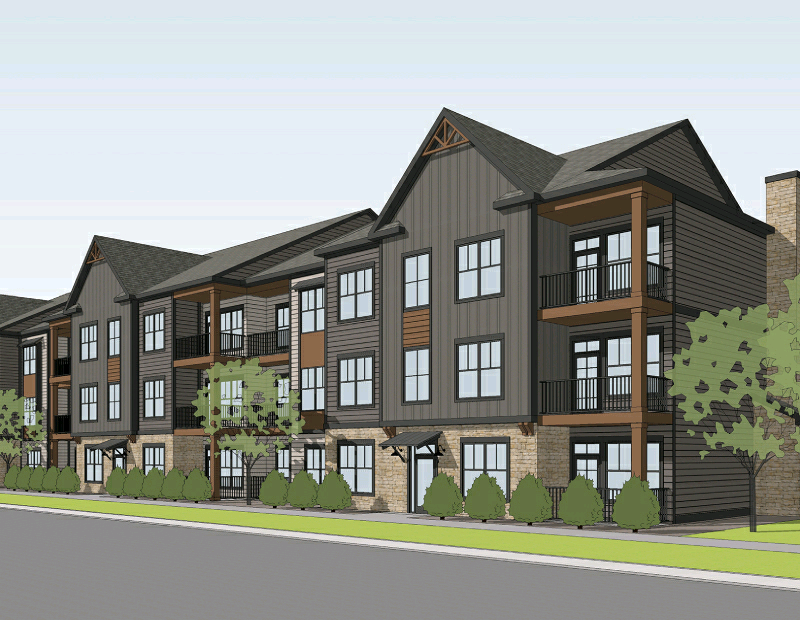
Martin County needs several thousand additional units. These units need to be in multi-family buildings. The building of single-family homes will not drop the level of asking rents which would alleviate the shortages. Within our cities and in the county CRAs there needs to be greater density so that enough units can be built. If a developer can put 30 or more units per acre, then the price of each unit to build is lessened.


In new projects that doesn’t mean the rent will be lower for those units. The sheer increase in units being offered will drive down the prices at older developments. We have all heard of the supply and demand axiom. It is true.


What would really provide here and the rest of the U.S. even more units at more affordable prices would be a true voucher system. In the old Section 8 program, an owner could be required to have his property inspected by the government before the voucher was issued. It became a bureaucratic morass.


In a true voucher system, the tenant would apply for vouchers based on income. If accepted, then the voucher payment would go to the property owner each month for the duration of the lease. There would be no required inspections except those that would be performed and monitored by local code enforcement. Any sub-standard conditions would be addressed the same as if the tenant were paying the entire amount of rent without assistance.


Collusion or fraud by owner or tenant would be handled like any other theft of services. Audits could be performed to make sure that housing accommodations were being rented to the recipient of the voucher. There need not be an overabundance of red tape.


The main thing we must all remember is that the housing shortage for everyone can only be made better with more availability of units. We need to stop protesting every time something is being built. If anything, we should be encouraging more building especially of multi-family construction.


I Love Wawa…And Costco!

I love Wawa. I love Costco.


Wawa treats their customers very well. I go there for gas and because of the free air for provided. I make it a point to buy all my gas at Wawa whether I need air or not because of that service.


Costco is the best warehouse club hands down. When I lived up north, I would shop there all the time. No supermarket beats the quality of their meat.


But, if I had to choose which of the two businesses I would rather have located here, it would be Costco.


Some of Palm City’s vocal residents by their continuous and contentious opposition to Costco has now resulted in Wawa with its 6000 square foot convenience store and 12 pumps locating on the site. Additionally, there will be a Tractor Farm Supply store and a 16,400 square foot Aldi supermarket going there. As a bonus, there may be a hotel and car wash too.


This is what has been approved where Costco considered building a store.  Many area residents came out and defeated the store going there. I wonder if they now will be much happier with this amalgam of businesses over that nuisance known as Costco.


Because if there is anything we hate in Martin County, it is change. And people think that these infill projects will never be developed. “Landowners should keep the property vacant,” we hear over and over as if the owner has no right to derive economic benefit from his asset.


In this instance, those complaining were the people now living in the developments that were once on empty scrub land. They moved into houses built on lands that were smack in the middle of the woods and pastures of Palm City. Their schools and churches were on bulldozed sites that were home to native animals, birds and plants that were forced to go elsewhere.


At the LPA meeting, there was only one gentleman who spoke in opposition according to an article in TC Palm. The board approved Wawa and the rest of the development on a 5-0 vote. According to Bob Raynes, the developer’s attorney, the use is as of right. But then so was Costco.


The difference was hundreds of people fought Costco and no one did this time. Did they just get tired, which ultimately happens, or were they manipulated by foes of the earlier project, which also occurs. Is Martin County better by having another Wawa and Aldi than Costco with its upscale merchandise and minimum $20 per hour jobs? I guess Palm City thinks so.


Costco is supposedly coming to Stuart. It will be sited close to the foot of the Memorial Bridge on Kanner Highway. The site provides easy access to the Palm City customer base which is their demographic. Many have voiced the same old concerns regarding traffic, etc. that they raised for the High Meadow Road project. The mob may sway enough Stuart commissioners to vote against the project. Politicians have the backbone of jelly fish.


Mark my words that if Costco does not go on that site something else will eventually. It is an infill project that will be built upon. Somebody will live in an apartment on that site. Someone will work in a store or other business on that site. The naysayers will not permanently stop the owners of the property from maximizing their investment.


I just hope they do not accomplish for Stuart what they did for Palm City. At least Palm City isn’t getting a giant adult bookstore or truck stop according to current plans. However, when it is built, Phase 2 may have something different than that hotel. Both the bookstore and truck stop also are zoned as of right for the property.

Florida scrub habitat in early springtime at Lake Kissimmee State Park in Lake Wales.

A Tale of Two Cities

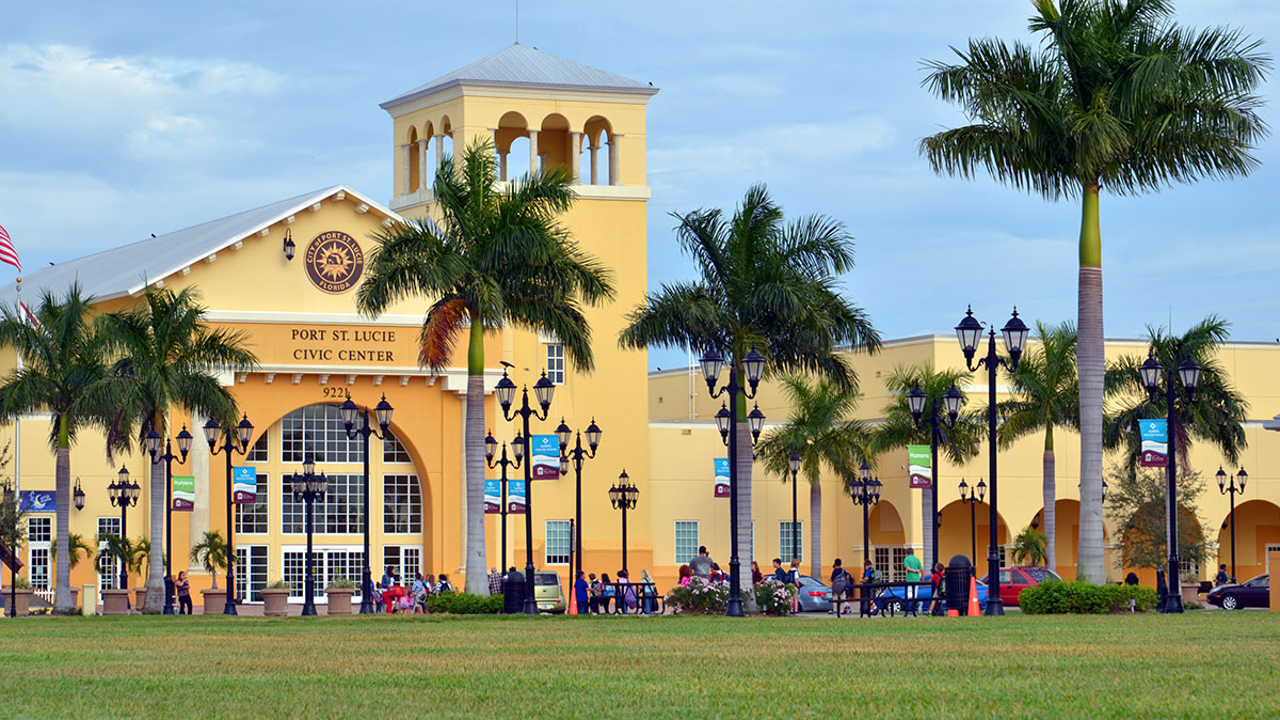
When Stuart was already an established city, the City of Port St. Lucie was nothing but a developer’s dream.


Fast forward 60 years and Stuart is much the same geographically as it was in 1961, a charming relic of Old Florida. Port St. Lucie is a city of over 200,000 people and still growing by leaps and bounds. As a Stuart resident, is my quality of life better or worse than someone who lives in Port St. Lucie? I will say that it is different.

Stuart was (and for the most part still is) the home of entertainment for much of the area but that is changing as Port St. Lucie continues to expand. As Port St. Lucie grows, the availability of restaurants and night life becomes better and more diverse to service its growing population. It is just natural that the more people that live in a city, the more opportunities there are for businesses of all sort.


That may be happening with the expansion of Cleveland Clinic. Even when it was Martin Health, the hospital in Tradition became the future and had a much bigger footprint than the original in downtown Stuart. Cleveland Clinic has bought an additional 44 acres in Tradition. Does anyone not think that will be where much of the future lies for the hospital system on the Treasure Coast?


Long ago, Stuart decided not to annex surrounding land as Port St. Lucie has continued to do. Now even if Stuart wanted to do so, there isn’t much available vacant land left. Geographically, Stuart is about as big as it ever will be. People have a conniption anytime Stuart annexes a few acres while in Port St. Lucie thousands of acres come in as a matter of course.


For all intents and purposes, Stuart has stopped growing. Sure, there are approved projects that could bring as many as 7,500 more people into the city if all is built. The population will still be significantly under 30,000 people. Not exactly a metropolis.


Economically, you cannot grow anywhere near what is needed to have enough jobs and create enough wealth for long term viability. At some point, the fire department will go away as will the police department as the ability to fund them is diminished. As municipal services shrink, so will the opportunities for everything from events to new business ventures.


Who do you think the politicians in Tallahassee will look to please…Port St. Lucie or Stuart in the years ahead? Stuart is like Blanche DuBois, the character in “A Streetcar Named Desire.” She a southern belle from a forgotten age living off her charms which are fading ever so slightly with each year that passes.


At some point, she is unable to cope with the brutality of life represented by her brother-in-law, Stanley. The vivaciousness and sheer sexual alure of her little sister, Stella, steals the spotlight from Blanche. Delusion and illusion of some mythical past no longer can be contained as the wider world intrudes on Blanche’s self-vision of a long ago past that could be only in her mind.


When does little sister, Port St. Lucie, consume it’s sibling Stuart to the south figuratively if not literally?


It Is Not About Costco

People are using the possibility of Costco coming to Martin County as a symbol in the development wars. It has little to do with Costco. It has everything to do with the future of the county.

Many have this idealized vision of what Martin County should be. It should remain as it was in (insert your own year here.)


Nothing stays the same. Flower farms were once prevalent on Federal Highway just as today is the retail sprawl that has taken the place of the farms. Yet many say Costco should be located there because it fits with their perception of what should be built on Federal Highway. Current plans have Costco located on Kanner Highway by Cleveland Clinic.


Others feel sorry for the family that owns the nursery on Kanner Highway. Rarely mentioned is the fact that the family sold most of the land that is currently being developed along that stretch of road. I guess farming or having a nursery is not as economically viable as land speculation.


Then there are those who claim that the now 6-lane Kanner Highway is a residential street not suited for anymore development. They forget that at one time the new development on the block was Riverland and there was not anything else. The condos, housing communities, fast food joints and other retail have been added over the past few decades.


Costco is the latest excuse being used by those who want to pull up the draw bridge after they arrive. What they are not understanding is that to control development, you need to allow development to in fact occur. It must happen is a very systematic way to prevent the sprawl that has enveloped our neighboring counties.


The best way to do just that is by providing density within an urban core. The City of Stuart and the county’s CRAs are the place to allow this to happen. Trying to keep Stuart or other urban core areas the way they were (again provide your own year) is not possible. All that will do is encourage growth in every direction without a central plan.


Two recent examples of just what I mean were the BOCC approving most of Christ Fellowship’s campus to be sold to a builder for hundreds of new homes. Last week, they allowed a swap of an agricultural parcel for an industrial one on Kanner at 96th Street to make way for a possible e-commerce warehouse. This to me is the real danger which is sprawl without any corresponding benefits.


Good planning is the continued development within the City of Stuart limits and the CRAs. As a county we will grow, and it will probably continue to be at the approximately 2% annual increase that we have had historically. Do we do that by filling in the blanks within the Urban Services Boundary (USB) and in our towns or by building more and more single-family homes on 2 or 5 acre lots encroaching on more and more ranches and farms.


Every time that type of development is approved, it places additional pressure on the surrounding agricultural lands to do the same. Residential development demands more infrastructure, schools, and retailers such as a Publix to service the new residents. This is classic sprawl.


Whether or not Costco is built is not germane to the argument being made. At issue is how Martin County plans the future.


If the Costco proposal is denied, something will go on the proposed site at some point and it will not be a farm or a nursery. It will certainly not be a development of single-family homes. Development should be encouraged where you have the infrastructure already in place. All manner of housing needs to be built to accommodate all our residents.


The question is not whether a Costco will be built but rather how will future Martin County be developed. The answer is not to say no to all growth but to have a plan for how we do develop and then to follow the plan.


There Is More Good Than Bad

We had a fairly good run in not having discharges from Lake Okeechobee into the St. Lucie River in 2019 and the summer of 2020.


That run of luck may be over now that the Army Corps of Engineers began releasing water last week. The Corps waited until the lake tipped at over 16 feet. We have not had an algae bloom in Stuart since the disastrous 2018 year. Will we have one now? It is not clear yet.


This week in TC Palm, it was reported that “Microcystin, a common toxin found in cyanobacteria, commonly called ‘blue-green algae,’ can linger in the air for 2 hours and travel up to 10 miles on gentle breezes of 4-7 mph, according to a new study by a team of scientists at the University of Florida.” Is that in our future?

Fingers are already being pointed at the Corps and SFWMD. Yet what good will finger pointing do to alleviate this problem? We have had one wet rainy season without a hurricane. The Lake acts as the reservoir for the agricultural lands to the south. It is full and, at least for the time being, those farms will not require much water. It is likely we will have releases for a while.


Is it all bad news? No, it isn’t. The C-44 reservoir and STA will hold 50,600-acre feet of water captured from local runoff and if necessary, from Lake Okeechobee. Jacquie Thurlow Lippisch, our representative to SFWMD, told me that STA can treat 46 billion gallons of water each year and remove more than 45,000 pounds of phosphorous.


I do not want to see from our local officials any more finger pointing, threats of lawsuits, or other failed tactics of division. As a state, a region, and a county, our elected officials need to be allocating and pushing for money. Money to build and finish the projects needed to stop our ecological disaster.


We keep hearing about the federal government finally getting serious about infrastructure spending. Florida water projects are infrastructure. They are more important to us than roadways, airports, or bridges. Without a resolution to our environmental problems, our future is bleak.


It doesn’t matter how much you want development; it is not possible without a solution to this problem. If you want to keep Florida with open spaces, you can not have that either without a solution. The Corps, District, and State of Florida want this problem solved as much as we in Martin County do and that is true of the people who live and work north, south, and west of the lake.


Now is the time to pull together to seek billions of dollars to make Florida livable into the future. Along with climate change and resiliency, we must address this issue together. If we alienate potential allies in this fight, the war for our future may be lost.

A Tool In The Tool Box

The voters of Martin County are being asked to re-authorize a business incentive program. The program is spearheaded by the Business Development Board (BDB). It is small potatoes in the realm of government spending. But it is important to note that since it was authorized in 2010, the program has never given out one penny. It came close…once.


So why is it needed? We have been told by the BDB that it is a necessary tool in the toolbox. You know like the special saw you bought in case you decide to make an elaborate rococo headboard.


What exactly would the happen if the voters approve the extension and the County Commission ever voted to award individual companies the opportunity of not paying their fair share of taxes?


It would allow companies moving into the area or expanding their businesses the opportunity to not pay ad valorem taxes under certain circumstances for several years. You can read the BDB’s accurate explanation of the program here


My position has always been that government should not give businesses handouts in any form or manner. The playing field should always be level for everyone. Make no mistake that when you allow Company “A” to pay no or reduced taxes, but not Companies “B” through “H,” government has demonstrated favoritism.


Even if everything is perfect and Company “A” hires more employees and builds a new machine to make its widgets, he is paying less taxes than all other widget makers doing the same thing. How is the economy better? If more widgets need to be produced, more widget factories will open because the market dictates that outcome. Business will do what is needed to make more money. These taxpayer subsidized incentives are government induced profit windfalls for a lucky few.


You do not build strong economies that way. Government needs only to allow all businesses the opportunity to permit, build, and hire capable employees without undue regulatory burdens. Both Palm Beach County and St. Lucie County offer these type subsidies. While programs such as this type of subsidy are used in those two counties and throughout the country, they do not produce any positive national GDP growth.


Time after time companies have moved to an area which gave little or no subsidies to those companies as compared to other governments. Amazon, ConAgra, and other companies base their decision on factors such as workforce availability and quality of life. Even corporate income tax rates are secondary concerns.


The best thing Martin County can do is stop taking months (and sometimes years) to green light a new commercial building. Martin County refuses to allow the housing needed to attract employees for businesses. Even when Stuart, on its city-limit fringes, approves apartments and lower-cost alternative housing, County residents cry no and sometimes County staff and Commissioners do as well.


Our schools need to produce educated employees in trades as well as other disciplines to fill those jobs. You cannot ask someone to create a business here if you make it so hard to open, their employees need to live in other communities, and they can’t find the necessary trained personnel to staff the enterprise.


Government must have as low a tax rate as possible for primarily the employees’ sake. Government needs to provide only those services that government should provide in the least expensive way possible. We do not need water parks and country club golf courses, but we do need adequate recreational areas and parks, roads, and schools. The elected officials need to be good shepherds of our tax dollars.


The Business Development Board received $450,000 of Martin County tax dollars last year. It has in the past and will continue to need that money in the future to keep its doors open. The Board of Directors are politicians and nonprofit executives with some private sector members mostly in banking, law, and real estate. (The Board can be found here


If you want to save nearly a half million dollars of taxpayer money a year, stop funding an organization that claims to be business-oriented yet needs a government handout to survive. There are five Chambers of Commerce in Martin County and an Economic Development Council. Those organizations are listed on the BDB website as having founded the organization. They should fund it too if the BDB is necessary in their opinion.


Better yet if the BDB provided a necessary product or service to the companies it is ostensibly recruiting then that company should pay for the perceived value of that service. Companies pay consultants, accountants, and lawyers all the time for advice. If the BDB has increased Martin County’s tax base through recruitment and retention of businesses, then it should be easy to quantitatively demonstrate that fact to the County.


Government never really demands hard facts. It is more than willing to go along with the fiction that something is being accomplished. Words such as develop, round-table, strategic, and collaborative, are often written and spoke at places such as the BDB. Seldom do you hear the expressions of bottom line or profit because to government and to semi-government organizations it is all about the perception of progress as opposed to concrete results.


The real difference is in the private sector if there is no profit the business closes. In government and organizations like the BDB there is always a future. They call it more funding we call it more tax dollars.    


We need to vote NO on re-authorization in August. Then we need to wean the BDB from receiving public funds. Every dollar spent on the BDB is one less dollar for needed resident services. I would rather make sure the County can pave an additional road or hire a few more employees to clean our drainage ditches each year than pay high salaries and fancy rent in Monterey Commons.


County Commissioners hang out with the people that populate the Chambers of Commerce, Economic Council, and the Business Development Board. It is easy for them to continue to fund their friends with your money. We need to make it a little harder to do so.


Who Interprets Development Orders?

No matter how small a development project that is presented before the Commission or an advisory board, there are conditions for approval usually attached. Who is responsible for making sure those conditions are fulfilled before the project ultimately obtains its certificate of occupancy?


Rightfully, the elected body assumes that the developer or builder will abide by those terms. When the final inspection is made to make sure the building code has been complied with, does anyone at the City or County look to see whether those other conditions were met? And if not, then why not? Who is guarding the hen house so to speak?


We must keep in mind that we have several different codes. Zoning and Land Development Regulations (LDR) are the ones that the Development Department and the Boards and Commissions create and administer within the parameters allowed by state law. The Building Official is responsible for making sure that Florida’s Building Codes are followed by the builder.


Even if the Commission wanted to, it could not alter the Florida Building Code. A Commissioner cannot tell his friend to forget about the sprinkler system if the Building Code requires it. What a Commission can do is give the developer 3 units more than would be allowed under the LDR.  They could change the zoning on the property from one use to the other to make the project move forward.


When the Commission does those things, it usually will require other changes in the developer’s plan. For example, it could require a second means of egress, more plantings to block the project from someone’s view or to have 8-foot sidewalks instead of 6 feet. It is a negotiation between both parties.


Supposedly, a certificate of occupancy is given after all the conditions of the plan approval are met. Sometimes, they simply are not. Other times, conditions could be open to interpretation. And, let us face it, the appointed and elected officials are no match for the expertise of staff. It is staff that does the interpretation.


I do not know what the answer is, but mostly the public loses in this battle of wits and wordsmithing. For the most part, elected bodies try to do the right thing. That is why they weigh the interests of all their constituents, the immediate neighbors, and the property owner. Ultimately, it is how staff interprets those compromises which are memorialized in development conditions that are so important.


Project approval is only the beginning of the process. The public needs to be aware of how that order is understood by staff. They are the ones that have the final authority. It may be up to you to make sure the order is interpreted as the Commission meant it to apply, and if not, bring it to their attention.