STUART COMMISSION KEPT ITS WORD!

Last week the Stuart Commission kept its word to city residents.


When they voted down the Silverthorne project which needed a land use change to construct 77 town homes, the commission indeed kept its word. If this project had come before the commission last year, it would have been approved in a heartbeat. This is not last year.


Each member of the board (except for Meier) had made a solemn pledge to not approve any new residential development outside the CRA until some of the existing approved projects come online this year. By doing so, the city can see whether we need more future residential projects or not. I would suspect that we do but a short break should not matter.


This does not, however, mean that the commission is now anti-growth. They are pausing residential development outside the CRA for a year so that the impacts that these new projects bring may be evaluated.
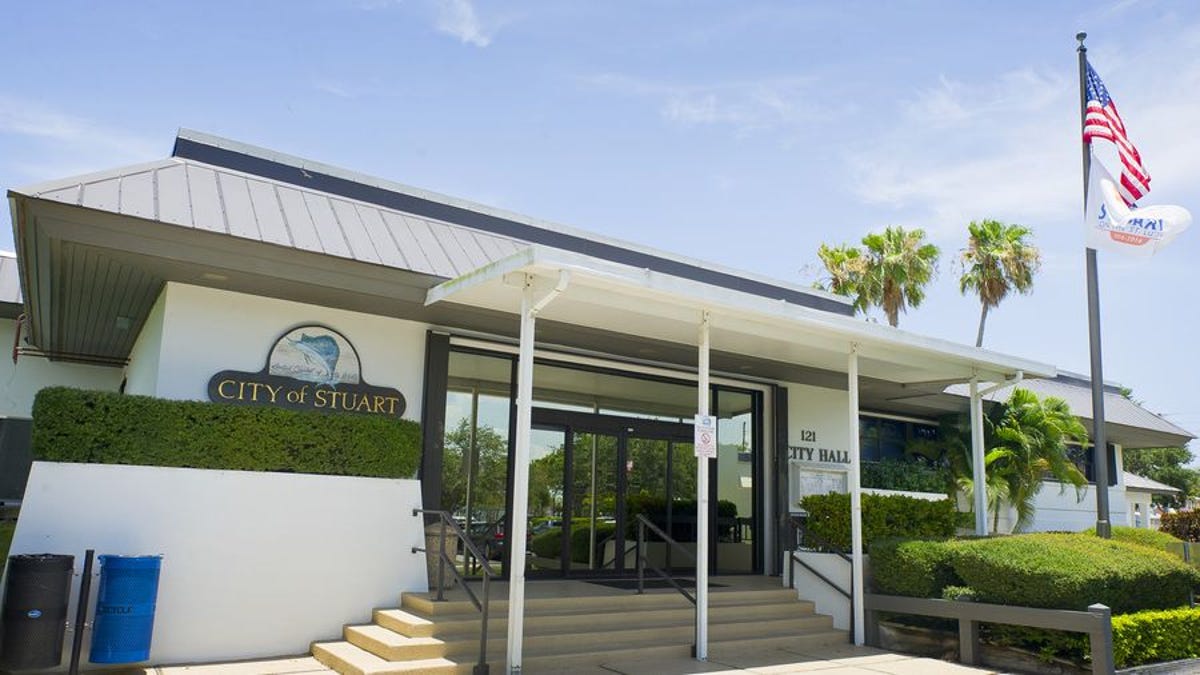
Many residents are afraid of a population influx that will change the character of Stuart. While Stuart will see an increase in population, it will not be so great that it cannot be absorbed. The key to keeping population within acceptable limits is to understand the impact our building height restrictions have. With a four-story maximum, you cannot cram enough units into any project to increase the population to Broward, Miami or even St. Lucie County standards.


Most Stuart residents realize that owners of vacant and under-utilized property have a right to develop their land. Within the city boundaries is where this more intense use should occur. I have a real problem with what may be going on with the rural lifestyle amendment to the county’s comp plan for western Martin County.


The one that has not yet fully been explained to the residents yet. There may be unintended consequences that are not being adequately explored. That is where our worries should lie.


There is a small minority of residents that believe no development should ever happen. That is not rational. Nor will their approach of “never” lead to good development practices occurring.


This is best illustrated from the hysteria by a few because of the Kanner CPUD (Costco). It is mostly non-city residents who are trying to stop the mixed-use development from being built. While they have admittedly slowed things down, the likeliness of stopping the project from completion is very low. And why should it be stopped?


It is a 50-acre parcel that was annexed into the city specifically for development. And contrary to what some of the NIMBY group suggest, the annexation did not occur so that single family homes could be built there as it was originally zoned by the county. This was always going to be some sort of mixed used development, and it is proceeding according to plan.


You may have also heard that the property was full of native habitat. In truth, it was an abandoned farm with cars and machinery buried and discarded on site. Unpermitted ponds were dug, and overgrowth had a sprinkling of endangered native plants. Those plants must be protected by the development order.


The owners and developers have a right to seek to develop the land to the highest and best use within the code. They are seeking to do this. Those who would try to prevent it should instead be looking at what is occurring in the county with the rural lifestyle amendment.


Stuart and its commissioners are taking the right approach for now. This is a brief respite before new residential projects are approved outside the CRA. It is inevitable that new projects will come before the commission. They will and should be approved.


For now, I think that it is probably a good idea for residential developers outside the CRA to heed the mindset of the commission. The residents want a break to see what happens. The commission majority has agreed with that. At some point next year, we will see new applications and the commission can look at them with the knowledge of what has come before and their true impacts.
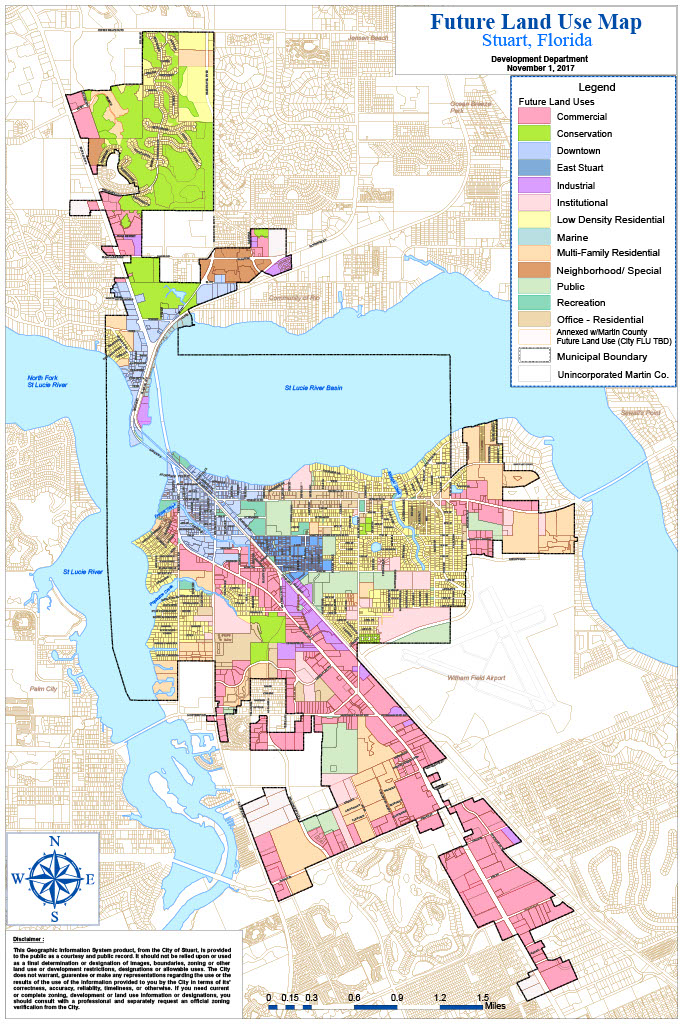



Annexation & Land Use

Once a parcel is annexed into the city, the City of Stuart often struggles with what land use to give the parcel.


The reason most people annex into the city is because Stuart allows for greater density than unincorporated Martin County. However, an annexation does not mean that the property owner is ready to do anything with the land. Sometimes, it can sit for years without a request to change the Future Land Use (FLU). During that time, it will keep the county’s zoning.

Once the landowner or developer is ready to build something, then he will come to the city and, as a first step in the process, ask for a FLU change. That is what happened with Costco, and for some, it was as if the world came to an end. So, upon annexation, should the city assign a future land use designation also?


Again, the Kanner CPUD became such a focal point because the county had given the property a zoning designation that allowed 5 homes per acre. Of course, that use was assigned decades ago. If that land use was allowed to stand, the property would have been worth a fraction of the amount that was paid.


There are two reasons a FLU is not assigned upon annexation. There is no idea what eventual use will be asked by the owner. The second reason is that if a land use is automatically given, then the commission may not need to weigh in when an eventual project is ready. Hard for a politician to bear.


After years of studying this very problem, I would contend that upon annexation, the land should be given the highest appropriate land use possible unless the owner wishes another one. But FLU needs to be part of the annexation.


Currently, a piece of land of approximately five acres on Willoughby that abuts the Kanner PUD is on the market for $3.295 million. That property was annexed into the city with its old Martin County land use. It isn’t being offered for sale at that price to build a few houses.


Interestingly, I have been told that the property is owned by a relative of Ms. Richards. She was the intervenor on the Costco parcel and wanted to keep the land use at 5 homes per acre. When this comes into the city, will she be fighting against the rezoning?


This parcel should be given the highest FLU now and that should be given the same land use as the Kanner CPUD. It is fair and is in conformity with the rest of its surroundings. It, too, is full of debris. Will Ms. Cartwright (the nemesis of the Costco development) treat her pal, Richard’s relative to the same tactics she is now employing with the Kanner CPUD mentioned in my companion pieces? It could result in the loss of couple of million dollars to the family of her ally and friend.

Is It Paradise Lost Or Another Junk Yard?

How many emails does it take to have the results that you seek? Robin Cartwright must think if she sends enough email, then she will have her results which is to stop the Kanner CPUD.


I have just read quite a few emails that she has sent to the city from late December through mid-January. She has claimed that the developer of the Kanner CPUD (Costco) has continuously exceeded what he is allowed to do with his permits. When pressed, however, for details about what exactly was wrong, she has only used generalizations such as, “We took a drone video this morning of the property. Please be advised that more than trails were cleared. Additionally, there are activities taking place on the property right now, which may or may not be “legal” as there is no silt fence nor chain link fence up…” An inspection made by the city building inspector showed no code violations going on.


The emails continued but without any proof of violations. At one point Mayor Matheson became involved. It appears he was giving direction to staff about going to the property. The development director sent an email to the building official on January 19th referencing the mayor asking him to send someone out to the site. Photos taken from a drone by Cartwright were the basis of the complaint though no footage was forthcoming.


When asked by City Attorney Mike Mortell to provide evidence of violations she claimed were occurring, Ms. Cartwright told him to visit the site. So far, every visit to the site has revealed no violations. Mortell wrote to her that she had only made broad accusations as to what was being done in violation of a permit. There has been no specificity to any claim.


Mr. Nicolosi, the building official, visited the site on January 19th. He walked the property and found no violations of the current permits. What he did find was that a pond that may or may not have had a DEP permit at the time of its creation was encroaching on the property from Lychee Tree Nursery. Nicolosi further found that “The Amy Busteed (3250 SE Willoughby) property has a building that is encroaching into the subject property. The building does not meet City of Stuart setbacks as well as constitutes a trespass as it is over the property line and inside the subject property according to the survey markers present.”


Nicolosi further states in his report, “The contractor contracted with a  company to use ground penetrating radar and has located several buried dump sites. The results of the radar investigation indicates that at some time in the past, someone excavated the property and dumped trash and debris and then covered it up to conceal the illegal dumping. The trash includes motorcycles, boats, axels, machinery parts, tires, etc. Below are pictures of some of the debris that was found.”


Nicolosi’s report can be found here


FWC also went out and inspected and found no violations.


Adam & Eve in Paradise
Pinterest

Apparently the pristine nature of the property claimed by Cartwright on the site of what will be people’s homes and stores was not a natural wilderness but rather an old junk yard. And both properties where actual violations have occurred and been documented were those of Linda K Richards’ family (she was an intervenor the Costco suit). So much for stewards of an ecological paradise.


In her emails to the city, Ms. Cartwright repeatedly states that she or someone at her direction is flying a drone over private property. She is video recording images of the property without the property owner’s permission. That is in violation of Section 954.50 of Florida statute. here


The city should not continue to bother the owner and contractors without specific reference to what in the code is being violated. Thinking something is wrong should not trigger an inspection which costs taxpayers money. It is enough without proof now of wrongdoing on the site.


Is this behavior harassment? I don’t know. But I do know that if it keeps up, I would not be surprised to see court action. The developer is not looking to hurt anyone, but we are talking about millions of dollars…which is serious money. Patience may be running out.


What Is An Expert Witness

This is the first of three articles regarding the Kanner CPUD.


When I was actively engaged in the real estate business, I would occasionally testify in court as an expert witness. I was a licensed real estate broker, a licensed insurance broker, I had designations as a Certified Property Manager from the Institute of Real Estate Management and a Certified Commercial Investment Member from the CCIM Institute.


Those various designations meant I had taken classes and had passed exams in my field. I took licensing exams and more education for the different states in which I was licensed as a real estate broker. But the most important aspect of being an expert witness was that I was currently and had for decades been engaged in the commercial real estate business as an owner, broker, and manager. All the certifications and licenses just proved my dedication to my profession. My testimony was valuable because of my experience.


EW Consultants has been in business for 25 years in Stuart. Edward Weinberg and his team have been used hundreds of times as expert witnesses for environmental and wetland matters in development projects in Martin County. They do the inspections and obtain the permits that are necessary to ensure that the law and rules are being followed. After authoring their report, it becomes part of the developer or landowner submission to the governing body.


If it is a contentious approval, someone from EW Consultants will testify, usually Weinberg, as to the contents of their report. In the Kanner CPUD (Costco) project, the developer hired Weinberg and EW Consultants to handle that part of the process. It was the developer’s expert witness.


One of the professional affiliations Weinberg had listed on his resume is being a member of the Society of Wetland Scientists. They have a certification program and Weinberg had been a member. Weinberg did not renew his membership in 2019. Does that disqualify him from being an expert and is that certification necessary?


On January 10th Robin Cartwright, who has opposed this project at every turn, sent an email to the Stuart City Commission and others stating that Weinberg was no longer certified by that organization. She went on to request that any action that was taken because of his lack of certification be reviewed and a third party be hired to review Weinberg’s reports.


Once again, there is no law that states Weinberg must be a member of the organization. There is no Florida agency that requires a license. Weinberg has put himself out there as an expert based on his experience and education including a Masters in Oceanography from FIT. Since he was certified by the Society of Wetland Scientist at one time, he had met their criteria. He did not want to continue with the organization for whatever reason. And there is no requirement that he does.


Since the report came from EW Consultants, the other members of the firm contribute to the work product. One of those members, Arnaud C. Roux, has that certification. Therefore, how many members of the firm need to belong to an organization that costs a substantial amount of money?


Further, the City of Stuart had EW’s report reviewed by a third-party consultant, Kimley Horn. It is true that Weinberg worked there but not since 1997. In his letter dated January 26th to the commissioners, the city manager correctly stated that if EW Consultants did not have what was required neither, the South Florida Water Management District or DEP would allow the company to pull permits on behalf of their clients. It is important to note that Florida Fish and Wildlife also allows the company to pull permits.


I go back to my statement about what an expert witness is. Much of that depends on what the trier of fact thinks of the individual purporting to be one. I know when I testified as one, I would be questioned on my credentials and experience first and then be asked about the case. The judge and, in some circumstances, a jury would decide how much credence to give my testimony.


And, besides, the Kanner CPUD has already been decided. The commission voted 5-0 to move forward with the project. There was an administrative state hearing regarding the land use which was instituted by Cartwright. Presently there is no decision on that matter. There are appeals that can be made but it is not likely the state or district court will go against the decisions of an elected body if all procedures were found to be followed.


You can find the city manager’s letter, resumes of Weinberg & Roux, and Cartwright’s email here

Parking & Form Based Code

Stuart is trying to implement form-based code in East Stuart and the Creek District. I hope that they do.


By doing so, the people who want to develop the properties they own within those areas know ahead of time what can be done. This should help end the many PUD applications that come before the commission. However, the commissioners would have to resist the temptation to insert themselves in the process going forward or otherwise they defeat the purpose of enacting that type of code.


Form-based code develops neighborhoods rather than individual projects. It takes a holistic approach. What this city and commission is used to doing is tweaking projects. Commissioners suggest to developers that they will vote to approve a project if the developer knocks a floor off here or puts a tree there. You need fifty parking spaces according to code but only have room for thirty-five, this is what you must do the commission tells the applicant.


The problem with that scenario is there is no consistency. Form-base code substitutes endless pages of tables and rules and states this is what the city wants to accomplish in this area. How the space is filled in the parcel is up to the developer. Another way to phrase form-based code is that a picture is worth a thousand words.


Ironically, by trying to exercise control over individual projects, the projects are often not as well implemented and designed as they should as part of an integral design for a neighborhood’s character. For example, consider parking. The lack of enough parking spaces as required by code has stopped many businesses from opening. While on Federal Highway, parking calculations are the explanation for empty parking lots, unfriendly streetscapes, and buildings set so far back that an observer can’t make out what businesses are located there.


Downtown Stuart has an excess of parking. There is no question about it. What it doesn’t have is a parking space for every customer directly in front of every business. Cities weren’t designed for that. Throughout the CRA, excess parking calculations to build a building or open a business have resulted in buildings not being developed or businesses not opening.


There are eight spaces for each car in the United States. Estimates are that 1/3rd of the land in cities is dedicated to parking. About 30% of a building’s cost are due to having code-required parking spaces. This is not sustainable.


Stuart must stop thinking in terms of 1960 and think about 2060 which is closer to the present. Within most of our CRA, we should forget about mandating how many parking spaces are needed for each apartment, home, or business. If parking becomes acute, then the private sector will build a garage. People who build housing know what they will need to make sure their buyers or tenants will live in the properties. The same for restaurants and stores. With all the complaining, how many businesses downtown have closed because of parking issues?

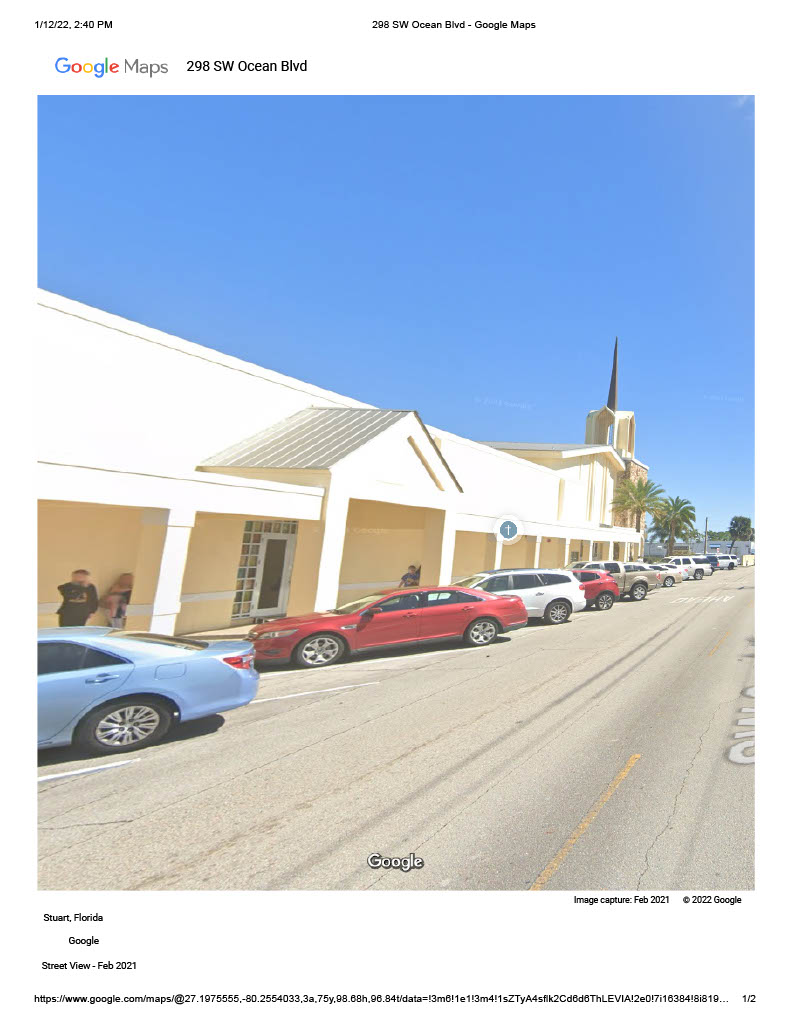
We should take places like the Baptist Church property that is for sale and the entire north side of Ocean Avenue from Dixie to U.S. 1, and have it rezoned and changed to a form-base code neighborhood. In that way a perspective developer will know what to build as of right. Once done, the commission should then stay out of the way and only allow it to be developed using the criteria within the window adopted.


Stuart commissioners and all governments are not very good at this part of running cities. They should bring their vision to a neighborhood then be confident enough to have the owners implement it. This may take decades for the vision to be built, but then the product will be much better than the one the current antiquated system is producing.


Jensen Mooring Field: Will It Be Folly Or Resource?

Will it be another Martin County folly or a valuable resource? That is the question I have with the viability of the Jensen Beach Mooring Field.


I am not yet ready to pronounce it as an intrusion into the private sector that will go down as another example of commission hubris. There could be a need for the service and a public that is willing to pay for it. But I have my doubts.


We should not forget that the first dock built needed to be torn out because the engineers failed to consider currents and wave action. We should also bear in mind that there is no law that requires boaters to be tied to a mooring ball instead of just dropping anchor anywhere outside of a navigation channel.

I am quite familiar with mooring fields because the Stuart Anchorage is located off my dock. Those that choose to use a ball are responsible boaters. Their vessels are pumped out so that their sewage doesn’t hit the water. Those boaters are out of the navigation channels. They are good neighbors.


Then occasionally, there will be what I call a boat bum who just drops anchor. The last boat bum simply dropped anchor at the end of my dock and was there for about three years. His sailboat had no workable engine and I never saw the sail unfurled. Yet he had a registration sticker which was all he needed to have. That is when I learned that a mere citizen cannot report someone dumping waste. It must be law enforcement that sees the violation being committed.

The owner of the boat was in the hospital and/or jail for a prolonged period. The registration expired. Law enforcement was able to then declare that the boat was abandoned and remove it. That may have been one of the ten best days of my life when that occurred.


My point is that a mooring field is not going to stop illegal dumping or prevent anchors from destroying sea grasses. It is not going to stop some inexperienced owner from anchoring his boat improperly before a hurricane and the vessel winding up destroying a dock when it comes lose.


What the Jensen Beach Mooring Field may do is provide a cheaper alternative to boaters who do not want to pay a private marina. Stuart’s Anchorage works because it is close to downtown. You can catch the tram once you dock your dinghy at the Marina. There is a Publix within walking distance. While you can walk to downtown Jensen Beach, it doesn’t have the same allure.


I am willing to give it the season to see whether it was the right thing to do or another waste of taxpayer money. Even if it is arguably the right thing to do to prevent dumping, preserving sea grass beds, and shorelines from being ravaged, will it? Boaters must stop throwing anchors down for free and begin paying to have their vessels safely moored. Without enforcement capabilities, I think we know the answer already.


We Need To Think Realistically About Martin County’s Future

There is no doubt that I am in support of good infill projects in Stuart and Martin County’s CRAs. That does not mean I endorse those projects that are poorly planned or disregard the codes and comp plan.


Martin County is on the cusp of deciding whether it will embrace sprawl or embark on a different course. The county can either continue the westward creep of more suburban mid-level 1960s-type single family home development or capitalize on our natural beauty. The Discovery/Becker Farms joint venture off Bridge Road is a unique opportunity to do just that.

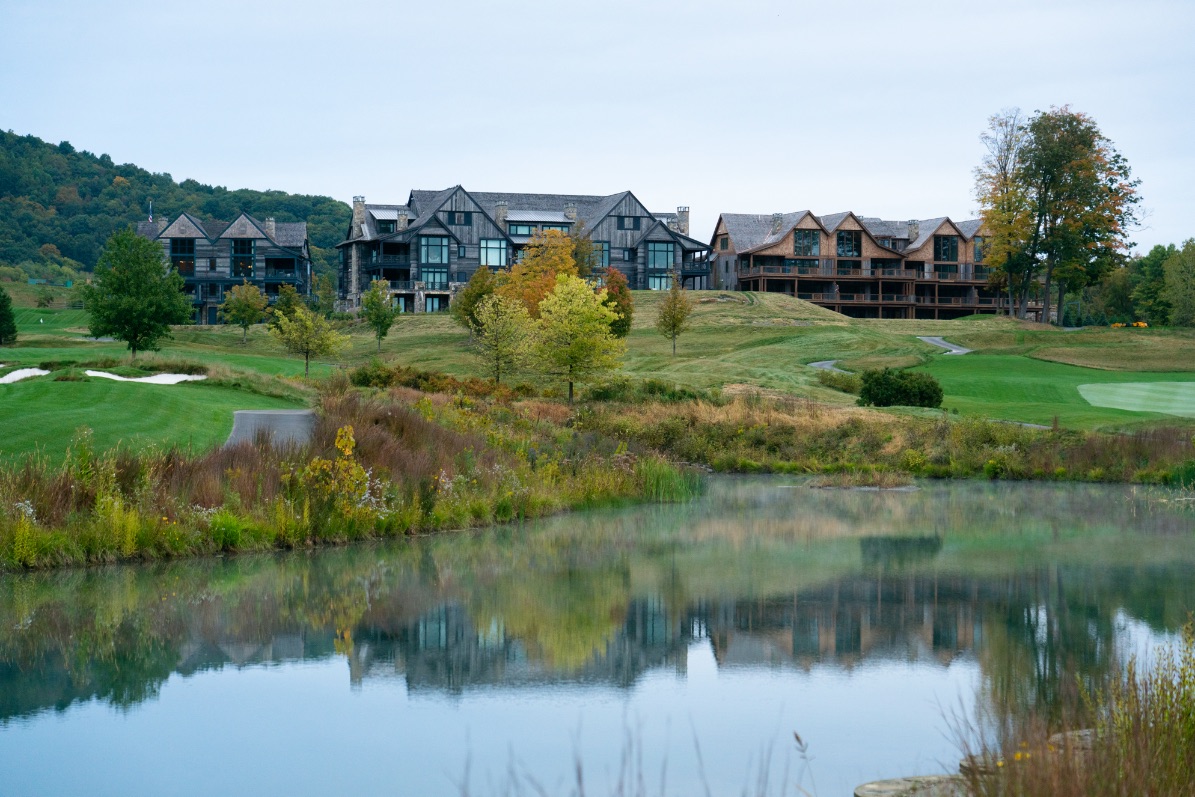
Silo Ridge in New York’s Hudson Valley has been popular with celebrities like Tom Brady

The project is a very wealthy man’s dream. It will be a place where the home buyer will spend millions to build a 3rd or 4th home for his collection. There will be no additional need for law enforcement or schools. The most that county services will have to do will be an occasional ambulance call. The real estate tax impact is estimated at $25 million with very few homes having a homestead exemption. Within the next decade, the alternative would be thousands of homes being built there instead of a few hundred.


The BOCC will also have the opportunity to approve the many high-end private golf courses coming our way. They will have no homes built, but there will probably be a few guest cottages and a club house at each. People will come from all over the world to become members and play on these courses. The impact to our environment will be minimal.


The private courses will also add millions to our tax rolls. Not to mention Discovery owners and golfers eating in our restaurants, buying goods from our merchants, and employing hundreds of residents. Or we can build thousands of homes and become what we have tried to avoid.


Many very naïve people believe that the BOCC or Stuart Commission can just say no. They cannot. There are such things as property rights. The current lawsuit that Harmony has against the county is all about property rights. That is in addition to the millions spent in previous lawsuits and settlements because of the disregard of individual rights.


What government can do is help shape what will be built. Development codes need to reflect that vision.


For those that want to see more housing, then it should be done in the city and CRAs. In these areas, there are quite a few underutilized properties. Just look at the Federal Highway corridor. Single story centers with empty stores and acres of empty parking lots. Adaptive re-use would give us mixed use developments with buildings set closer to the streets and parking in the rear or in some cases in parking garages.


It is time we stop the silly illusions some have that those empty parcels within the city and county Urban Service Boundary are going to remain vacant. People are going to come here to live and work from other parts of Florida and the country. We all need to recognize this and stop the propaganda that persists regarding some governmental power to prevent development.

Photo From Conservation Fund

What we can do is shape it so that large swaths of Martin continue to be used in agriculture and ranching. At the same time, the county can get behind projects like the Loxa-Lucie, IRL South, and Pal Mar to save wetlands and provide a natural flow way.  We can adopt realistic goals or have more failed opposition to the idea that an owner can be prevented from exercising his/her property rights.

Stuart Taxpayers Continue to Subsidize A Private Entity

I study the county’s budgets along with the school board and the different municipalities as well. This article will look at Stuart and its relationship with the non-profit, Stuart Main Street.


According to its website, “Stuart Main Street uses the Main Street Four Point Approach to create and promote a positive downtown experience for residents, businesses, and visitors.” It would seem to us to be a good goal to achieve. That goal is in line with what a chamber of commerce should do. Should Stuart be subsidizing with taxpayer dollars a private organization to fulfill that goal?


Its website outlines past glory stretching back to 1986 when the city’s downtown was a ghost town. Some of their more recent achievements listed are the 2009 involvement in upgrades along Colorado Avenue and participating in the discussion regarding whether city hall should move from its current location in 2014. The latest press release included on the site is a year old with the notice that they hired a new executive director.


For many years, the organization was under the auspices of the city and the executive director was a city employee. The administrative part was also performed by the city. To be recognized as a “Main Street” by the Main Street umbrella organization there must be an independent board and the local program must have a full-time director.


When the city-paid executive director left her city position, a new deal was struck with the organization to allow them to lease Flagler Center which would soon be empty on very favorable terms. They then could have events and sublease space for an income stream.

Flagler Place

Until Flagler Center could get on its feet and provide rental income, the city would subsidize the organization with a grant of $70,000 for the first year and decreasing over the next two years until it was to be extinguished at that point. The agreement is now entering its third year, and the organization is still receiving the full $70,000.


In the interim, the contract with the Sunday Greenmarket operator was terminated by the city and an agreement was struck with Main Street to manage that at less than what the last operator paid.


The question to be asked is whether the taxpayers are receiving a benefit of this largess to a private entity? It seems that the main occupation of this organization in the last several years is putting on events in conjunction with the Downtown Business Association. Their signature event is the weekly Rock’n Riverwalk Sunday afternoon music series held on Stuart’s stage.


They also have several craft fairs per year and events like Hob Goblins on Main Street and a Christmas event of some sort. The events, except Rock’n, are run by a marketing company and not Stuart Main Street who simply acts as a middleman.


Just like a person, an organization has a life span. Thirty-five years ago, Stuart’s downtown was a literal ghost town. The businesses had been hollowed out by changing shopping patterns. The growth of the county’s population needed more than just one block of stores where people could shop. That was accomplished. However, that left downtown Stuart with many empty store fronts.


The Main Street Organization was instrumental in bringing back a new downtown consisting of restaurants and one-of-a-kind stores. This is in sharp contrast to what had been there before consisting of more mundane businesses such as a drug store and department store. Downtown today is a destination spot for tourist to enjoy an old-time vibe and for locals to have places to eat.


Today’s vibrancy requires different approaches than what worked in the past. Success should be celebrated. That does not mean that the city should continue feeding an entity that at this point should be standing on its own. It is no longer the sole voice but one of many interest groups.


Stuart’s CRA is undergrounding utility lines on Seminole Street. While Stuart Main Street was a proponent of outdoor dining, it was only one of many voices calling for it. The success of the initiative is mainly the result of the efforts of the restaurants themselves not one outside organization.


In my opinion, it is time for the city to stop subsidizing this organization with money and favored lease deals. If the city wants to continue with any program that is currently under the auspices of Stuart Main Street, it can do so without paying a middleman but just hiring the event company itself. Originally Stuart was the producer of the Sunday concert series.


The CRA budget has grown considerably over the past several years. Some of the programs that it funds are stuck in an earlier time. Those funds should be used on brick-and-mortar projects such as it did with buying and then bringing the infrastructure in for Azul, the successful multi-family property on city-owned land.


Unfortunately, just like the county, Stuart too often plays politics using tax dollars for their favored organizations. Stuart does so…only on a much smaller scale. The Stuart City Commission needs to debate the question in the open and come up with a way to have Main Street become a truly independent organization.


If a Stuart taxpayer heard that the Stuart Chamber of Commerce was receiving a subsidy from the city for promoting the businesses of chamber members, the taxpayers would be outraged. Is there a difference here?


The Hypocrisy of the NIMBY Crowd

In big cities and small towns, some American liberals have a problem living up to their own standards. They preach the gospel of helping the poor and working classes, but every time it requires any change to their own surroundings, they become adamant foes.


The most prevalent cause of this is keeping restricted zoning laws throughout the United States. They gussy up their opposition claiming it is environmental degradation to allow more rental housing units to be built next to their upper middle-class neighborhoods. Another favorite ploy is claiming that the character of those neighborhood may be changed. Meaning that people of a lower socio-economic class may move next door.

This recently came to the forefront in Stuart when the opposition to a real estate project which included both apartments and a Costco store brought out this crowd. They are superb NIMBY adherents. Speakers used the environment (there are no natural wetlands on this old farm site), traffic (it is on a six-lane roadway), its location next to a high school as if speeding shoppers are going to mow down our youth, and the perplexing, “we don’t want any more people to live here.”


This behavior is nothing new by those claiming to want to help people but only in the abstract. Their adherence to the secular faith of helping the poor underclasses is their modus operandi except when they may be called upon to have those people in their presence.


Homes and jobs are important for everyone even those without a college degree and the ability to make a house down payment. They will never have either if we do not allow the market to function. I would understand and even agree if they had plopped this development down within an existing single family home neighborhood. This is not the case.


One of the chief opponents to the project had one of her experts claim the area was rural in character (that is far from the truth) and another claim that traffic would be horrendous because over 12,000 people lived within a square mile of the project. The current 6 lane highway is not even at a third of capacity according to engineering studies.


Restricted and outdated zoning has worsened the housing shortage in this country. Upper class Republicans and Democrats both use restrictive laws to keep their areas free of others not in their economic niche. For some reason, those that bemoan the fate of the working class get up my dander the most when it comes to this behavior.


There is a place for zoning, but it should not exist to perpetually leave people behind. The best way to help is by encouraging job creation and adequate housing which only the private sector can do sufficiently and efficiently. I am certainly in favor of job training, housing assistance, and food assistance being government provided. But I will criticize those that speak about lofty goals then actively subvert the market from providing just that.


Tallahassee’s Version of The Godfather


The Florida legislative season is over. It was a hard session if you believe in local government control. The continuation of the Tallahassee brand of “pater familias knows best” attitude was pre-eminent.


“Pater familias” is a Latin term for head of the family. In ancient Rome, the oldest male in a family oversaw the family property and all the other family members as well. His word was law. There was no need to consult the rest of the household before making decisions. This was basically the way the mafia was organized with the godfather as head of the family.

            PINTEREST


The Florida legislature has a history of making sure that local governments do not go to far afield in how and what they do. They are eager to prevent cities and counties from passing things that would make their contributors unhappy. Industries do not want to deal with individual counties and cities. They would rather whisper in the ears of the heads of the families, as legislative leaders believe they are.


If a city bans plastic bags, the legislative leaders pass a pre-emption. The builders want uniformity, and the heads of our state families have the building codes changed so that locals can’t intrude on architectural details. Our state fathers proclaim freedom for their local families unless it interferes with their friends. It almost sounds like a “Godfather” movie.


For example, Key West residents wanted to limit cruise ship traffic as evidenced by 60% of the Key West voters saying yes to the limitation. The legislature then inserted into another bill a retroactive provision that would prohibit local ballot initiatives restricting maritime commerce. It does not matter what the people want. State pols will make sure that the plebes do not cross the economic patricians who contribute to the families’ coffers.


This issue of impact fees serves as another example. In my opinion, impact fees are not always justified, especially in a built-out municipality. I would much rather see individual projects pay for their impacts as part of the PUD agreements when projects are approved. Just because I think impact fees are not useful does not mean I want Tallahassee limiting the ability of local governments to collect them. How about the legislature stays out of the matter and allows local people to decide whether they should be imposed?


From tree ordinances to short term rentals, the best decisions are local. I thought implementation of the straw ordinance in Stuart was a waste. Even though many businesses have complied, how much has it helped the environment…none. It was a feel-good measure and nothing more.


Though I opposed the implementation of that ban, I supported the Stuart commission’s authority to do so. In the past several years, Florida has moved from local governments making the decisions to a dictatorship imposing its will under the guise of freedom.


Do not be fooled. There is not freedom when Tallahassee tells us what to do. Our political tribes call the shots because the likelihood that our state representatives will lose in a re-election are very slim to none. Martin County is a very safe Republican stronghold where there are no worries about the voters.

It is not whether you agree with a particular position, it is whether you want the decisions made by state pols who believe your preferences are immaterial. Pre-emption of local governance has slowly taken away our individuality…not enhanced it. The political dribble “new speak” is just that…a way of making you think that what they do in Tallahassee is best. Do not buy it for a second. Tallahassee does what is best for Tallahassee’s politicians.